

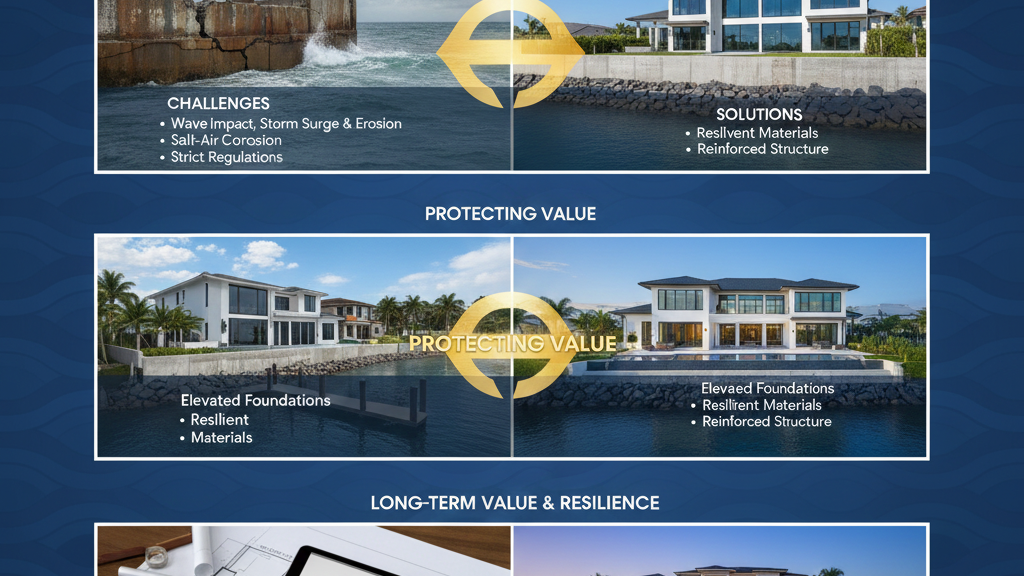
Designing and building a home on the water in Palm Beach is a dream for many—and a technical challenge for everyone involved. Waterfront views, boat access, and ocean breezes are incredible, but they also bring wave forces, salt, and strict regulations into the picture. After more than a decade working on coastal projects, I can tell you this: Building on the Waterfront: What Every Palm Beach Homeowner Should Know About Coastal Engineering is less about scary engineering jargon and more about smart planning, the right team, and understanding your site.
In this guide, we’ll walk through what makes waterfront home building coastal engineering Palm Beach unique, what systems protect your investment, and how to make decisions that support both your lifestyle and long-term home value.
Why Coastal Engineering Matters for Palm Beach Waterfront Homes
Unique Challenges of Coastal Construction
Wave impact, storm surge, tidal fluctuations
On the drawing board, “waterfront” means views. In reality, it also means dynamic forces. Wave action, storm surge, and daily tides literally shape your shoreline over time. For oceanfront homes, waves can pound seawalls and foundations. On the Intracoastal and canals, boat wakes and king tides can still push water levels higher than you might expect.
A good coastal engineer will model these forces and help position your home, pools, and amenities so they withstand extreme events—not just calm days.
Salt-air corrosion, humidity, and long-term structural wear
Salt air is relentless. Metal fasteners, railings, and hardware that perform perfectly inland can corrode quickly at the water’s edge. Humidity also affects wood, insulation, and finishes. Coastal engineering isn’t only about foundations and seawalls; it’s about specifying materials and details that can handle corrosion, moisture, and expansion over decades.
Increasing Climate & Regulatory Pressures
Sea-level rise projections and flood risk
Sea-level rise and stronger storms are not theoretical for Palm Beach; they’re part of permitting conversations today. This is where coastal erosion and structural planning Palm Beach luxury homes come together. Elevating homes, reinforcing shorelines, and planning for higher water levels are now standard practice for responsible waterfront construction.
Stricter local, county, and state coastal-building codes
Florida and Palm Beach County apply strict coastal engineering requirements to waterfront builds. Expect enhanced wind-load standards, flood-elevation rules, and additional scrutiny for any project near the waterline. It can feel like a lot of red tape, but these rules exist to keep your home standing and insurable.
How Coastal Engineering Protects Home Value
Resilience reduces insurance premiums
Homes built with robust coastal engineering—impact openings, reinforced roofs, elevated floors, and solid shoreline protection—can qualify for better insurance rates and credits. Over the lifespan of a luxury home, that savings is substantial.
Increases longevity and marketability of the home
When buyers compare Palm Beach waterfront properties, they’re not just looking at finishes. They ask about age of the seawall, type of foundation, and hurricane performance. Smart coastal construction considerations Palm Beach homeowners make today are exactly what will help your property stand out and sell faster in the future.
Understanding Palm Beach Coastal Zones & Regulations
Identifying Your Waterfront Zone
Oceanfront, Intracoastal Waterway, canals, and lakefront differences
Not all waterfront is created equal. Oceanfront properties face direct wave energy and more severe storms. Intracoastal sites have boat traffic, wakes, and tidal changes. Canal and lakefront homes may have calmer waters but can still face flooding and erosion issues. Each has different engineering priorities and sometimes different permitting paths.
FEMA flood maps, Base Flood Elevation (BFE), V-zones vs A-zones
Your Federal Emergency Management Agency (FEMA) flood zone—and your Base Flood Elevation (BFE)—drive many design decisions. V-zones (coastal high hazard areas) often require open foundations and breakaway walls, while A-zones have different requirements. Understanding these designations early is crucial to coastal engineering requirements Palm Beach waterfront homes.
Key Palm Beach County Codes for Coastal Builds
Coastal Construction Control Line (CCCL) requirements
In many areas, Florida’s Coastal Construction Control Line (CCCL) sets limits and special design standards for building close to the beach. If your home site falls near or seaward of this line, your coastal engineer and builder must follow specific rules for foundations, setbacks, and dune protection.
Wind-load engineering (hurricane impact standards)
Palm Beach County requires homes to withstand high design wind speeds, with engineered tie-downs, strengthened framing, and impact-rated windows and doors. This is where engineering challenges building waterfront homes Palm Beach County really show up—your structure must handle both vertical and lateral loads from wind and surge.
Permitting Requirements for Waterfront Construction
County permits, environmental review, seawall/dock permits
Waterfront projects often need multiple layers of permitting: building permit, environmental review, dock or seawall permits, and sometimes state or federal approvals depending on the water body. It’s not unusual for coastal engineering drawings to be reviewed by more than one agency.
HOA or architectural committee approvals for waterfront properties
Many waterfront neighborhoods also have HOA or architectural control committees. They may regulate dock size, seawall finishes, and even visible mechanical equipment. Aligning engineering, aesthetics, and community rules is a key part of a smooth project.
Core Principles of Coastal Engineering for Residential Homes
Foundation and Soil Stability
Pile foundations, auger-cast piers, soil compacting, and geotechnical reports
Coastal soils can vary dramatically—sand, fill, muck, or a mix. A geotechnical report will tell your engineer how deep to go and what type of foundation you need. Many Palm Beach waterfront homes use driven piles or auger-cast piers to reach stable layers below the surface.
Mitigating settlement and erosion
Proper foundations are only half the story. Your engineer also considers how nearby seawalls, drainage, and shoreline changes affect long-term settlement. Ignoring this can lead to cracking, sloping floors, or structural movement years down the line.
Flood & Storm Surge Protection
Elevated finished-floor levels
One of the most important coastal construction considerations Palm Beach homeowners face is how high to build. Elevating your finished floor above BFE (and often a bit more) reduces flood risk and supports better insurance outcomes.
Breakaway walls, open foundations, storm-resistant structural systems
In high-hazard zones, lower-level walls and enclosures are designed to break away under extreme surge rather than fight the water. This protects the main structure. Elevated columns and open foundations are common tools in modern waterfront engineering.
Erosion Control & Shoreline Protection
Seawalls, revetments, riprap, and living shoreline solutions
Seawalls and revetments act as hard barriers against erosion, while riprap (rock armoring) helps absorb wave energy. More recently, some properties are incorporating “living shorelines”—using vegetation and natural forms to stabilize and soften the edge. Your engineer will recommend solutions that fit your site, regulations, and budget.
Maintaining natural buffers and vegetation
Grasses, mangroves, and dune vegetation are not just pretty—they hold soil in place and help slow water. Preservation or restoration of natural buffers is often part of a smart coastal engineering plan.
Wind Resistance Engineering
Impact windows/doors, reinforced roofing, strapping systems
Impact-rated windows and doors, robust roof sheathing, and continuous load paths (from roof to foundation) are essential. These features don’t just meet code—they dramatically improve how your home performs in real storms.
Aerodynamic building design considerations
Roof shapes, overhangs, and building massing all affect how wind flows around your home. Coastal engineers and architects sometimes soften certain edges or adjust shapes to reduce problematic wind pressures.
Structural Features That Enhance Waterfront Durability
Material Choices for Coastal Conditions
Marine-grade metals, treated wood, composite materials
On the water, standard hardware simply doesn’t last long. Stainless steel (proper grades), marine coatings, pressure-treated lumber, and composites are often used for docks, railings, and exterior details. These choices help protect against the salt-air corrosion and humidity that are central concerns in waterfront home building coastal engineering Palm Beach.
Mold-resistant insulation, high-performance coatings
Inside the walls, mold-resistant insulation and high-quality vapor barriers keep humidity from causing hidden problems. Exterior paints and coatings designed for coastal use help protect stucco and siding.
Roofing & Exterior Envelope Upgrades
Concrete tile, metal roofing, sealed roof decks
Concrete tile and standing-seam metal roofs are common for luxury waterfront homes because they perform well in wind and last longer when properly detailed. Sealed roof decks add another layer of protection against wind-driven rain.
Waterproofing membranes and corrosion-resistant fasteners
Balconies, flat roofs, and parapet details are notorious failure points if not waterproofed correctly. Coastal engineering ensures proper membranes, flashing, and fasteners are specified so these areas don’t become chronic leak sources.
Proper Drainage & Water Management Systems
Swales, French drains, permeable hardscape
Managing runoff is critical. Swales, French drains, and permeable pavers help keep water flowing away from foundations and prevent pooling. The goal is a site that handles heavy rain gracefully rather than turning into a pond.
Sump pumps, smart stormwater design
Some waterfront homes use sump pumps and engineered drain systems to manage groundwater and stormwater. Smart design ensures these systems have backup power and clear discharge routes, especially during big storms.
Waterfront Amenities: Engineering Considerations for Docks, Pools & Outdoor Living
Dock & Seawall Engineering
Requirements for docks on the Intracoastal Waterway
Docks on the Intracoastal often have specific length, setback, and elevation requirements—and sometimes navigation or environmental constraints. Engineering these correctly keeps you compliant and protects your structure from wave and wake forces.
Materials and anchoring systems for storm resilience
Dock piles, hardware, and decking must be chosen with storms in mind. Proper anchoring, flexible connections, and durable materials reduce damage when water levels rise and winds pick up.
Pools Near the Waterfront
Structural engineering for elevated or cantilevered pools
Waterfront pools—especially those with infinity edges or close to seawalls—need careful structural design so they don’t crack or shift with soil movement. Elevated or cantilevered pools are impressive, but they also add load to the structure, so coastal engineering input is non-negotiable.
Hydrological constraints and soil stabilization
Groundwater, drainage, and soil stability all affect pool performance. On some Palm Beach sites, your engineer may recommend deep foundations or ground improvement beneath the pool shell.
Outdoor Living Spaces
Designing terraces, patios, and decks with proper drainage
Terraces and patios should be sloped correctly, with drains and scuppers that can handle intense summer rain. Poorly drained hardscapes can push water toward the house and undermine foundations over time.
Wind-resistant outdoor structures (pergolas, cabanas, kitchens)
Outdoor structures must be engineered like mini-buildings. Cabanas, pergolas, and kitchens need proper anchoring and wind resistance so they don’t become debris in a storm.
Insurance, Risk Mitigation & Long-Term Maintenance
Insurance Requirements for Waterfront Homes
Flood insurance, wind insurance, and premium reduction through mitigation
Most Palm Beach waterfront homes will require flood coverage and specific wind/hurricane insurance. Coastal engineering features like elevated construction, impact windows, and fortified roofs can support better rates and credits.
Long-Term Maintenance for Coastal Properties
Corrosion checks, repainting cycles, seawall inspections
Even the best engineering needs maintenance. Regular inspections of seawalls, docks, metal components, and exterior finishes help catch problems early. Repainting and recoating schedules should be part of your long-term plan.
Roof, window, and structural assessments after storms
After major storms, a quick professional assessment of roof systems, windows, and key structural elements is wise—even if everything looks fine from the ground.
Resilience Planning & Emergency Preparedness
Generator installation, impact shutters, storm prep systems
Standby generators, impact shutters (if not fully glazed), and clear storm prep procedures are part of a complete resilience strategy. This is where smart coastal construction considerations Palm Beach homeowners link directly to peace of mind.
Choosing the Right Coastal Engineer & Builder
Credentials and Experience
Engineers specializing in coastal + geotechnical design
Look for structural or civil engineers with proven coastal and geotechnical experience in Palm Beach County. They should be comfortable with flood zones, seawalls, piles, and local regulations.
Builders with proven waterfront expertise
Waterfront projects are not the place for a builder’s “first coastal job.” Choose a team that has successfully handled engineering challenges building waterfront homes Palm Beach County before, with photos, references, and permits to prove it.
Collaboration Between Engineer, Architect & Builder
Integrated design for aesthetics + resilience
The best results happen when your architect, engineer, and builder collaborate from day one. That’s where artistry, lifestyle, and engineering strength all line up in one coherent plan.
Questions to Ask Before Hiring
Experience with your type of waterfront (oceanfront vs ICW)
Ask specifically whether they’ve worked on oceanfront, Intracoastal, or canal projects similar to your site—and how they approached coastal erosion and structural planning for Palm Beach luxury homes like yours.
How they address erosion, flood, and wind load challenges
Listen for clear, specific answers: elevation strategies, seawall design, foundation types, and wind-load calculations. Vague responses are a red flag.
Homeowner’s Pre-Build Coastal Checklist
Get a coastal engineering assessment before buying or building
If you’re purchasing a waterfront lot or older home with plans to rebuild, bring a coastal engineer into the conversation early. They’ll identify constraints and opportunities you can’t see on your own.
Understand your elevation, flood zone & soil conditions
Get your elevation certificates, flood zone data, and geotechnical reports upfront. These are the backbone of good coastal design.
Confirm all permitting pathways early
Check which permits you’ll need—building, dock, seawall, environmental, HOA—and how long each typically takes. This avoids last-minute surprises.
Budget for resilience upgrades (not optional in coastal zones)
Impact glass, strong roofs, quality materials, and seawall/dock work are not “extras” on the water—they’re essentials. Build them into your budget from day one.
Plan for long-term maintenance of seawalls, drainage, and exterior materials
Set realistic expectations for maintenance cycles. Think of coastal engineering as the foundation and maintenance as the routine that keeps everything performing as designed.
FAQs: Coastal Building in Palm Beach
Is it more expensive to build on the water in Palm Beach?
Generally yes. Engineering, materials, and permitting needs are higher on waterfront lots. The trade-off is premium value when the home is designed and built correctly.
How high must a waterfront home be elevated?
It depends on your specific flood zone and Base Flood Elevation. Your engineer will recommend a finished-floor elevation that meets or exceeds code and supports better flood resilience.
Do I need a seawall, and how often should it be inspected?
Most waterfront properties have seawalls or some kind of shoreline protection. These should be professionally inspected on a regular basis—especially after major storms or visible changes in the shoreline.
What materials last longest in salt-air environments?
Marine-grade metals, properly treated wood, composite decking, impact-rated windows and doors, and high-quality roofing systems tend to perform best when paired with good detailing and maintenance.
Can I build a pool close to the seawall?
Often yes, but it requires careful structural and geotechnical design, and you may encounter specific setback or permitting rules. Your coastal engineer and builder will guide what’s realistic on your site.
Conclusion — Build Smart, Build Resilient on the Palm Beach Waterfront
Coastal engineering is essential—not optional—for long-term value
Building on the Waterfront: What Every Palm Beach Homeowner Should Know About Coastal Engineering comes down to one idea: beauty and resilience must go hand in hand. The more thoughtfully your home is engineered, the better it will perform, appraise, and resell.
Resilient construction increases safety, durability, and resale
From seawalls and foundations to impact glass and roofing, every coastal engineering decision is an investment in safety and long-term value. Buyers today are more informed than ever; they recognize and reward homes built to a higher standard.
With the right team and planning, waterfront living becomes both luxurious and secure
If you’re considering a waterfront build or major renovation, start with the right guidance. Explore Our Service Area to see where we work across Palm Beach County and nearby coastal communities. For more on waterfront planning, permits, and strategy, read Waterfront Custom Homes in Boynton Beach: Planning, Permits & Tips, or learn about regional opportunities in Moving to Palm City, FL.
Ready to talk about your site, seawall, or future build and put everything from Building on the Waterfront: What Every Palm Beach Homeowner Should Know About Coastal Engineering into a real plan? Call 561-962-4567 and the Luxure Group team will walk you through next steps—from assessment to design to construction—with your long-term safety and value at the center of every decision.