

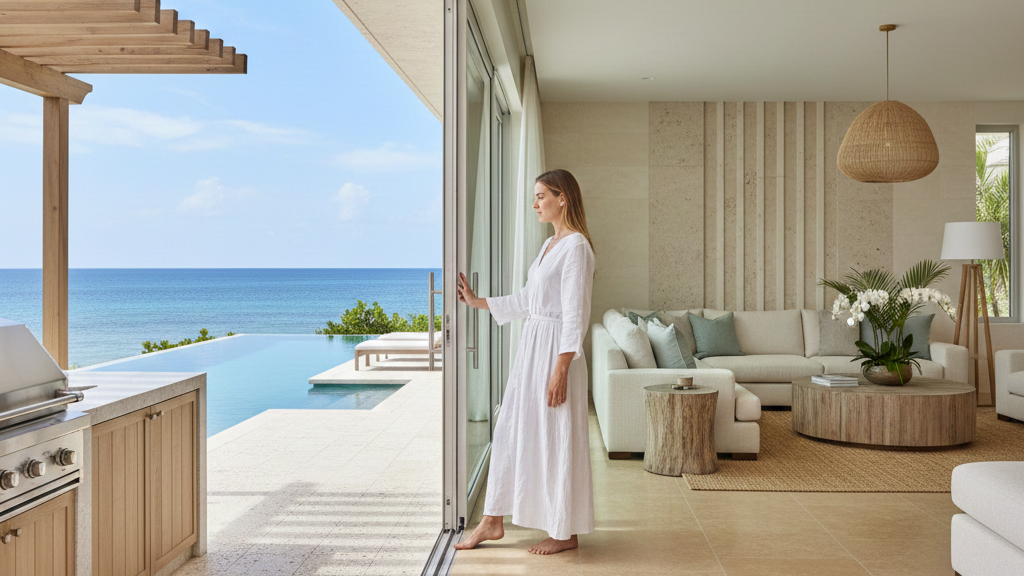
Standing in a finished coastal home that truly feels “right” is one of the best parts of this work—the floors feel solid under bare feet, hardware still looks brand new after salty summers, and the finishes catch the light instead of fighting it. That doesn’t happen by accident. It comes from making smart, climate-aware material choices from day one.
This is The Ultimate Guide to Choosing Flooring, Finishes, and Fixtures for Coastal Luxury Homes—a practical roadmap based on years of designing and building in South Florida. We’ll talk about the best flooring for coastal luxury homes Palm Beach, finishes that can handle humidity and UV, and high-end finishes and fixtures for oceanfront homes Palm Beach buyers actually look for when it’s time to sell.
Why Material Selection Matters More in Coastal Luxury Homes
Unique Climate Challenges
Humidity, salt air, UV exposure, storm conditions
Coastal homes aren’t just “pretty houses by the water.” They’re frontline structures constantly dealing with:
- High humidity, especially in the summer
- Salt air drifting in from the ocean or Intracoastal
- Intense UV exposure on floors, walls, and fabrics
- Storm conditions and wind-driven rain
That’s why the ultimate guide choosing flooring finishes fixtures coastal luxury homes always starts with performance, not just Pinterest boards.
Mold, corrosion, and fading risks
Pick the wrong materials, and you get cupped floors, rusted fixtures, peeling paint, and fabrics that fade in a single season. Pick the right ones, and your home still feels new years after move-in.
Importance of Durability + Luxury Aesthetic
High-performance materials that match premium interior design
Luxury homes demand both: performance and polish. The good news is that today there are plenty of luxury coastal interior design materials Palm Beach FL that are as beautiful as they are tough—porcelain that looks like marble, corrosion-resistant metals that look warm and rich, and engineered woods that hold up better than traditional solid planks.
Resale Value & Long-Term Maintenance
Buyers expect coastal-resilient, low-maintenance finishes
High-end buyers in Palm Beach County don’t just ask, “Is it pretty?” They ask, “Will this hold up by the ocean?” Smart material choices can absolutely help your home stand out in a competitive coastal market.
Quality materials preserve home value over time
Better materials mean fewer emergency repairs, fewer early replacements, and a home that still shows like a “new build” when it’s time to sell. That’s one of the big reasons The Ultimate Guide to Choosing Flooring, Finishes, and Fixtures for Coastal Luxury Homes isn’t just about style—it’s also about protecting your investment.
Flooring Options Ideal for Coastal Luxury Homes
1. Porcelain & Ceramic Tile
Water-, stain-, and fade-resistant
Porcelain tile is the workhorse of coastal luxury. It’s dense, non-porous, and highly resistant to water, stains, and UV exposure. Sand and wet feet are no problem, and with the right texture, it’s actually quite forgiving.
Ideal for high-traffic + indoor–outdoor spaces
In open-plan coastal homes where sliders disappear and the living room flows straight out to the pool, porcelain keeps everything consistent. It’s one of the best moisture-resistant flooring options coastal luxury homes can use—especially in main living areas, kitchens, and pool-adjacent zones.
2. Natural Stone Flooring
Marble, limestone, travertine, quartzite
Natural stone brings a timeless feel to coastal interiors. Marble and limestone can look stunning in formal spaces, while quartzite offers additional hardness and durability.
Sealing requirements and slip-resistant finishes
Stone needs regular sealing, particularly in salt and humidity. For bathrooms and outdoor areas, honed or textured finishes are safer than highly polished surfaces. If you’re going stone-heavy, plan for ongoing care—it’s worth it when done right.
3. Engineered Hardwood
More stable than solid wood in humid environments
Many coastal clients love the warmth of wood but worry about swelling and cupping. Engineered hardwood is built for this: a stable core below a real wood veneer. When it’s installed correctly and humidity is controlled, it can perform well even near the ocean.
Best species and finishes for coastal homes
White oak and similar tight-grain woods with matte or wire-brushed finishes are especially forgiving. High-gloss floors tend to show every scratch, grain raise, and grain movement—matte finishes are your friend in a beach environment.
4. Luxury Vinyl Plank (LVP)
Waterproof, durable, design-flexible
LVP has come a long way. High-end products offer realistic wood visuals, strong wear layers, and full waterproof performance. This can be a great option in lower levels, kids’ spaces, or secondary suites where practicality is a bigger priority.
When LVP is appropriate in high-end settings
Used thoughtfully, LVP can fit into a luxury home, especially in back-of-house spaces or where you want durability without constant worry. It shouldn’t replace premium finishes everywhere, but it’s a smart part of the mix.
5. Specialty Outdoor Flooring
Ipe, teak, composite decking, coral stone pavers
For decks and pool areas, we often use ipe or teak for natural warmth, or composite decking for lower maintenance. Coral stone and other cool-touch pavers are popular around pools and patios in Palm Beach.
Slip, heat, and salt-air performance
Focus on slip resistance and heat gain—some darker stones and composites can get very hot under bare feet. Look for products rated for coastal use and designed to stay comfortable in full sun.
Wall Finishes, Paints & Surfacing Materials
High-Performance Paints
Mildew-resistant, salt-blocking, UV-stable paints
Coastal paint systems should be mildew-resistant, with strong UV stability and good permeability (so walls can breathe) while still protecting from moisture.
Best finishes for bathrooms, kitchens, and ocean-facing walls
In baths and kitchens, use semi-matte or satin for easy cleaning. For ocean-facing exteriors, premium paint systems and proper prep make a huge difference in how often you’re repainting.
Luxury Wall Treatments
Venetian plaster, limewash, stone panels, textured wallpapers
Venetian plaster and limewash can be stunning in coastal homes—soft, layered, and reflective without being shiny. Stone feature walls and high-performance wallcoverings add depth and character.
Coastal color palettes enhancing light & views
Think soft whites, warm sands, pale blues, and muted greens. These colors play nicely with strong natural light and reflect the coastal setting without feeling themed.
Moisture-Resistant Backing Materials
Mold-resistant drywall, cement board, waterproof membranes
Behind the pretty finishes, you want mold-resistant drywall in baths, laundry rooms, and lower levels, cement board behind wet tile, and proper waterproofing membranes everywhere water can sneak in.
Countertops, Cabinetry & Millwork for Coastal Conditions
Countertop Materials
Quartzite, porcelain slabs, engineered quartz, sealed natural stone
Quartzite and porcelain slabs are rock-solid choices for kitchens and ocean-facing spaces—excellent durability, relatively low maintenance, and good UV tolerance. Engineered quartz is still popular, but prolonged UV exposure can be a concern outdoors.
Heat, UV, and etching considerations
For serious cooks or outdoor kitchens, factor in heat and etching. Some natural stones are more prone to etching from citrus or wine; quartzite or porcelain often perform better in these demanding zones.
Cabinetry Construction
Marine-grade plywood, thermofoil, lacquered finishes
Cabinets in coastal luxury homes should be built for humidity: marine-grade plywood boxes, high-quality veneers or lacquers, and properly sealed edges. Thermofoil can work in some applications, but quality and installation matter.
Hardware resistant to humidity and corrosion
Use stainless or properly coated hardware inside cabinets. In waterfront homes, standard hardware can rust shockingly fast.
Millwork & Built-In Details
Custom woodwork suited for coastal humidity
Built-ins and trim should be made from stable, well-dried materials with finishes designed to move slightly with humidity swings without cracking or peeling.
Durable finishes for long-term performance
High-end paint systems and conversion varnishes keep millwork looking crisp even as the seasons change. It’s one of those details that separates “luxury” from “nice.”
Fixtures Designed for Coastal Luxury
Plumbing Fixtures
Stainless steel, brass, and corrosion-resistant finishes
When choosing coastal home finishes and fixtures selection guide priorities, start with plumbing. Solid brass bodies with high-quality finishes (polished nickel, brushed nickel, unlacquered brass, or marine-grade stainless) tend to perform best.
Spa-quality faucets, shower systems, soaking tubs
Thermostatic systems, rain heads, hand showers, and deep soaking tubs give that five-star experience. Just make sure the finishes are rated for humid, coastal environments.
Lighting Fixtures
Marine-rated outdoor fixtures
For exterior lighting, specify coastal or marine-rated fixtures—especially on oceanfront homes. Regular fixtures can pit, peel, or fail quickly near salt air.
LED technology for efficiency and longevity
High-quality LEDs last longer, run cooler, and handle frequent use better. Warm 2700–3000K is usually ideal in luxury coastal interiors.
Cabinet & Door Hardware
Materials that resist rust: stainless, bronze, powder-coated metals
Handles, pulls, and hinges are small details that get a lot of abuse from salty hands and air. 316 stainless, bronze, or quality powder-coated metals are worth the investment—especially in oceanfront homes Palm Beach buyers are scrutinizing closely.
Outdoor Living Materials for Coastal Homes
Outdoor Kitchens & Entertainment Areas
Marine-grade cabinetry, porcelain counters, stainless appliances
Outdoor kitchens should be treated like a boat: marine-grade cabinets, high-quality stainless appliances, and counters that can handle sun, rain, and salt (porcelain or certain granites work well).
Furniture & Fabrics
UV-resistant fabrics (Sunbrella), teak, powder-coated aluminum
Invest in outdoor fabrics designed for UV and mildew resistance, and frames in teak or powder-coated aluminum. Cheap outdoor furniture looks tired fast in this climate.
Exterior Cladding & Surfacing
Fiber-cement, stucco, stone, composite materials
Fiber cement, good stucco systems, and select composites all perform well when installed and detailed correctly. For deeper insight into durable coastal building systems, it’s worth reading The Ultimate Florida ICF Guide, which explores structure and durability from the ground up.
Architectural Considerations When Choosing Materials
Indoor–Outdoor Flow
Coordinated flooring transitions
Use similar tones or materials inside and out to visually extend spaces. Even if you switch from porcelain inside to stone outside, keep color and scale harmonious.
Durable materials for sliding/folding door thresholds
Thresholds see sand, water, and constant use. Choose robust track systems and non-slip, durable materials here—repairs in this zone are disruptive and costly.
Natural Light Enhancement
Light-reflective finishes that brighten coastal interiors
Matte but light-reflective finishes on floors and walls help bounce light deeper into the home. Avoid overly shiny floors that show every mark and glare.
Style Consistency With Luxury Coastal Architecture
Mediterranean, modern, transitional, coastal contemporary
Materials should support the architecture: warmer stones and wrought metals for Mediterranean, cleaner lines and lighter tones for modern/coastal contemporary, and a mix of both for transitional. Consistency is what makes a home feel curated, not random.
Performance Factors to Consider Before Selecting Materials
Moisture Resistance
Preventing warping, swelling, and mold
Ask directly: “How does this handle humidity and water?” That question alone can save you from a lot of regret later.
Corrosion Resistance
Protecting metals and hardware from salt exposure
Hardware, fasteners, fixtures, and outdoor elements should all be specified for coastal conditions—especially anywhere within a few miles of the ocean.
UV Resistance & Color Stability
Preventing fading on floors, paint, and fabrics
Choose materials rated for UV stability wherever strong sunlight hits daily—especially floors, rugs, and any upholstered piece near glass.
Slip Resistance & Safety
Especially for pool decks, patios, and bathrooms
Always check slip ratings for pool decks, bathrooms, and stairs. Beautiful is important, but safe is non-negotiable.
Sustainability & Eco-Friendly Luxury Material Options
Reclaimed woods suitable for coastal humidity
Reclaimed woods can add incredible character. Just be sure they’re properly dried, sealed, and suited to coastal humidity.
Natural stones with low embodied energy
Locally or regionally sourced stone can reduce transport impacts while still looking luxurious.
Non-toxic finishes and low-VOC paints
Low-VOC products make a big difference in indoor air quality—especially important in tight, energy-efficient coastal homes.
Highly durable materials that reduce lifecycle replacement
Sometimes the most sustainable choice is simply the one that lasts longest in your climate. Less replacement = less waste.
Budgeting & Cost Considerations
Where to spend vs where to save
Invest heavily in moisture- and corrosion-prone areas
Splurge on flooring, exterior finishes, fixtures, and hardware that directly face humidity, water, and salt. You can simplify in lower-impact spaces like secondary bedrooms or closets.
Long-term maintenance costs vs upfront cost
Cheap materials can be very expensive in the long run. Balance upfront savings against repainting, refinishing, or full replacement cycles.
Warranty and manufacturer guarantees
Look for products that stand behind performance in coastal conditions. Read the fine print to confirm coastal exposure doesn’t void coverage.
Working With the Right Builder & Designer
Importance of coastal construction expertise
A team that truly understands coastal building will steer you toward better choices from the start. They’ve seen what fails and what holds up over ten+ years by the water.
Ensuring materials meet building code & HOA guidelines
Some communities have specific rules for roofing, cladding, and colors. Your builder and designer should keep your selections compliant while still achieving your vision. You can explore where we work across Palm Beach County and beyond in Our Service Area.
Builder–designer collaboration for cohesive luxury design
The best results come when structure, finishes, and fixtures are considered together—not in separate silos. That’s exactly how we approach coastal projects, whether you’re moving to Boynton, Palm Beach, or neighboring communities. If you’re still exploring areas, The Ultimate Guide to Moving to Boynton Beach (2025 Edition) is a great resource.
Homeowner Checklist for Selecting Flooring, Finishes & Fixtures
Confirm moisture, UV, and salt-air resistance
Ask every vendor how their product performs in South Florida coastal conditions.
Verify slip ratings for indoor/outdoor transitions
Especially where water is involved: bathrooms, pool decks, and entries.
Choose low-maintenance luxury materials
Look for surfaces that clean easily, resist stains, and don’t require constant babying.
Ensure material availability + lead times
Beautiful materials stuck on a container ship don’t help your schedule. Confirm realistic lead times.
Align selections with architectural style
Keep your materials in harmony with the home’s architecture and overall story.
FAQs for Coastal Luxury Material Selection
What finishes last longest in a coastal environment?
Porcelain tile, quartzite or porcelain slabs, high-quality stucco or fiber cement, marine-grade metals, and UV-rated outdoor fabrics are consistently strong performers.
Can wood floors work near the ocean?
Yes—with engineered wood, proper installation, humidity control, and realistic expectations. Many of our coastal clients enjoy engineered hardwood in main living and bedroom areas.
Which metals resist corrosion best?
316 stainless, bronze, and properly applied powder-coated aluminum tend to hold up best in salty air.
Do luxury materials require special cleaning?
Some do—especially natural stone and specialty finishes. Your builder and designer should provide care instructions at handover.
What materials add the most resale value?
Buyers consistently value durable, coastal-appropriate flooring, impact-rated windows and doors, quality stone or porcelain counters, and corrosion-resistant fixtures and hardware.
Conclusion — Designing a High-Performance, High-Luxury Coastal Home
The right materials protect your investment and elevate your lifestyle
The Ultimate Guide to Choosing Flooring, Finishes, and Fixtures for Coastal Luxury Homes really comes down to one idea: beauty and performance must work together. When you choose wisely, your home not only looks incredible on day one—it still feels fresh and solid years later.
Combine beauty + performance for long-term coastal resilience
From best flooring for coastal luxury homes Palm Beach to fixtures that laugh at salt air, every smart choice you make now pays you back in comfort, durability, and peace of mind.
With proper guidance, you can achieve a truly timeless coastal luxury interior
If you’re ready to apply this guide to your own project, start by checking Our Service Area and exploring regional resources like our Boynton Beach and ICF guides. Then call 561-962-4567 to speak with the Luxure Group team. We’ll help you use The Ultimate Guide to Choosing Flooring, Finishes, and Fixtures for Coastal Luxury Homes as a blueprint—to choose smart materials, design a truly coastal-ready interior, and create a home that feels as good as it looks, year after year.