

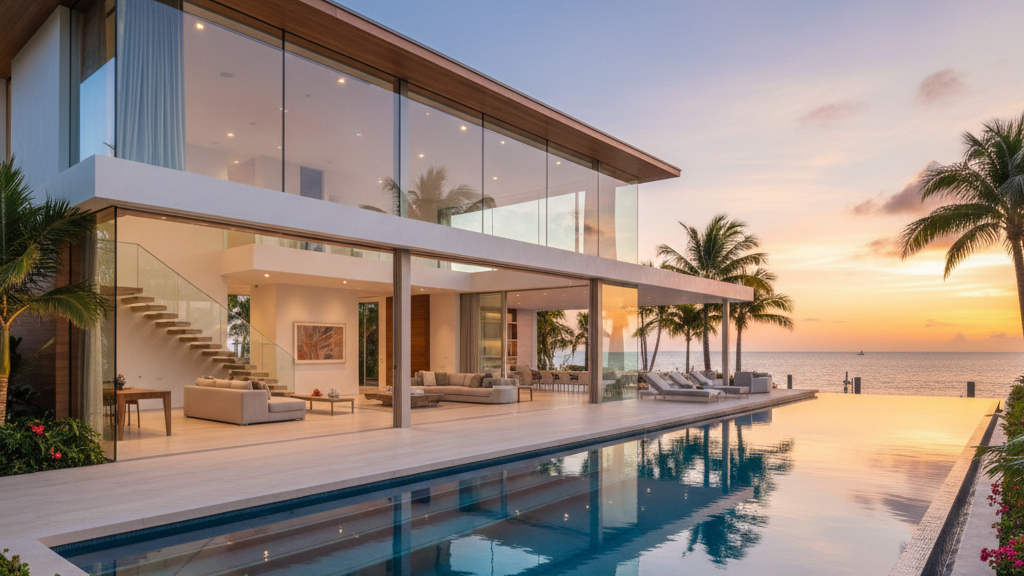
When you build or remodel near the water, you’re not just creating a house—you’re framing a view and shaping the way natural light moves through your life every single day. After more than 10 years working on high-end coastal projects, I’ve seen one thing over and over: homes that are thoughtfully planned for light and views simply feel better to live in and are worth more when it’s time to sell. In this guide, we’ll walk through How to Maximize Natural Light & Ocean Views in Coastal Home Design with clear strategies you can use with your architect, builder, and designer.
We’ll cover everything from site planning and structural systems to furniture placement and privacy solutions—so your home works with the sun and the ocean, not against them. Whether you’re building from scratch in Palm Beach or refining an existing coastal property, these coastal home design strategies for natural light and views will help you get it right the first time.
Why Natural Light and Ocean Views Matter in Coastal Living
Lifestyle & Wellness Benefits
Mood enhancement, circadian support, sense of openness
Natural light is one of the simplest, most powerful design tools you can work with. Generous daylight supports your circadian rhythm, helps regulate sleep, and creates a subtle sense of openness that no fixture can match. When we design to maximize natural light coastal home design ocean views together, mornings feel brighter, afternoons feel calmer, and spaces naturally invite you to relax rather than retreat.
Connection to nature and the coastal environment
Big water views do more than impress guests. You’ll catch changing weather, shifting tides, and that soft twilight glow you only get by the ocean. Framing those views correctly keeps you connected to the place you chose to live, rather than shutting it out behind solid walls and small windows.
Property Value & Market Desirability
Homes with optimized views command premium pricing
In coastal markets like Palm Beach, buyers don’t just pay for square footage—they pay for views. Oceanfront home design maximize views Palm Beach style means using every opportunity to showcase water from main living areas and the primary suite. If two homes offer similar finishes but one consistently captures the water, that’s the one buyers fight over.
Modern buyers prioritize light-filled, view-oriented layouts
The days of dark, compartmentalized rooms are over at the high end. Today’s buyers want layouts that feel open, bright, and aligned with the water. That’s why coastal luxury home design ocean-view optimization is one of the best investments you can make in both lifestyle and resale.
Architectural Identity in Coastal Regions
Clean lines, openness, indoor–outdoor integration
Coastal architecture tends to favor simplicity, strong geometry, and a seamless connection between inside and outside. When we talk about architectural tips for maximizing natural light in coastal homes, we’re also talking about an overall identity: fewer fussy details, more glass, thoughtful shading, and room arrangements that feel relaxed but intentional.
Site Planning Strategies for Maximizing Light & Views
Positioning the Home on the Lot
Orienting main living spaces toward the ocean or intracoastal
The biggest decisions for your views happen long before framing starts. Ideally, main living areas, the primary suite, kitchen, and key outdoor spaces should be oriented toward the water or best view corridor. This is where window placement strategies for oceanfront homes coastal design begins—on the site plan, not the finish schedule.
Understanding sun path, winds, and privacy considerations
It’s not just about pointing the house at the water. You and your design team should map the sun’s path and prevailing winds so you can capture morning light where you want it and manage afternoon glare where you don’t. At the same time, think about neighboring homes and terraces so your most open, glass-heavy elevations don’t compromise privacy.
Leveraging Elevation & Topography
Elevated foundations for flood protection AND improved sight lines
In coastal zones, elevated foundations are often required. Used wisely, that extra height can improve your view angle over dunes, seawalls, or neighboring roofs. Instead of treating elevation as just a code requirement, treat it as a chance to push your main living level into prime viewing territory.
Multi-level terraces and rooftop spaces
Stacked terraces, rooftop lounges, and second-story balconies can reclaim views where ground-level sight lines are blocked by vegetation, dunes, or homes across the street. Done well, these outdoor platforms are some of the most cherished spaces in the home.
Designing for Coastal Setbacks & Regulations
Working within CCCL and flood zone constraints
On oceanfront sites, coastal construction control lines and flood zones limit how close you can build to the water and how high key floors must sit. Instead of fighting these rules, we use them as design drivers, pushing the view-heavy rooms where they perform best within those boundaries.
Structural strategies to achieve views without violating codes
Sometimes we use cantilevers, carefully placed columns, and smart structural spans to “reach” for a view without crossing setback lines. This is where a good engineer and architect team is invaluable.
Architectural Design Techniques to Capture Natural Light
Window Placement & Size Optimization
Floor-to-ceiling glass, clerestory windows, corner glazing
To really maximize natural light coastal home design ocean views, think in layers of glass: tall sliders at eye level, clerestories above to pull light deeper into the room, and corner glazing to dissolve the boundary between inside and outside. The goal is to balance breathtaking views with comfortable, glare-controlled spaces.
View framing vs maximizing light intake
Sometimes you don’t need “more glass,” you need better placed glass. A single, well-framed opening that captures a distinct slice of ocean can feel more powerful than a full wall of unfocused glazing. Work with your architect to decide where you want cinematic, panorama moments versus quieter, filtered views.
Open-Concept Floor Plans
Fewer interior walls = deeper light penetration
Every wall you remove is one less obstacle for natural light. Open main living areas let light travel from the view side of the home back through kitchens, dining zones, and hallways. This is one of the simplest coastal home design strategies for natural light and views.
Aligning circulation spaces to preserve sight lines
Try to avoid long corridors that dead-end in solid walls. Instead, align circulation so hallways terminate in windows, art, or a view. Even movement between rooms becomes a way to experience the light and the ocean.
High Ceilings & Vertical Light Strategies
Vaulted ceilings, double-height spaces
Higher ceilings allow light to enter at different angles and times of day. Double-height living rooms with upper-level glass can feel bright even in softer morning or evening light.
Skylights, light wells, atriums
Skylights and light wells bring top-down light into deeper parts of the plan—stair cores, interior hallways, or even bathrooms that don’t have exterior walls. Just be sure they’re detailed correctly for coastal rain and wind conditions.
Reflective and Light-Amplifying Materials
Pale flooring, glossy finishes, bright-neutral palettes
Flooring and wall colors dramatically affect how far light reaches. Pale woods, limestones, and bright-neutral paints bounce light farther into the room. You don’t need everything white, but lighter tones in large surfaces go a long way.
Strategic mirror placement to extend light
Mirrors placed perpendicular to windows—not directly opposite—can capture a slice of ocean and “repeat” it deeper into the space, adding both perceived light and a subtle sense of expansion.
Engineering & Window Systems for Coastal Light Optimization
Impact-Resistant Glass for Coastal Zones
Marine-grade, hurricane-rated window systems
In coastal areas, you’ll typically use impact-rated glazing. The good news: modern systems are capable of large, beautiful openings while still meeting strict coastal requirements.
How structural engineering affects allowable glass spans
The size and placement of your windows will be tied to structural spans, wind loads, and deflection limits. This is another reason to involve your engineer early when planning coastal home design strategies for natural light and views.
Frame Types & Sightline Advantages
Slimline aluminum, steel, or architectural-grade composites
Slimmer frame profiles mean more glass and less visual interruption. High-performance aluminum, steel, or composite systems can deliver strong, narrow sightlines while handling wind and corrosion.
Choosing finishes that resist corrosion
Finish selections matter as much as profiles. Look for marine-grade finishes and hardware specifically rated for coastal conditions to keep frames looking clean for years.
Glare Control & Energy Performance
Low-E coatings, tinting, UV filtering
Low-E coatings and selective tinting help control heat gain and UV exposure without turning your home into a cave. You get the view and the brightness, minus the harshness.
Smart shading systems to balance light and heat
Motorized shades tied to time-of-day or sun sensors can automatically adjust to keep interiors comfortable. This is especially useful in rooms with large east- or west-facing glass.
Interior Design Strategies to Enhance Natural Light Flow
Light-Reflecting Material Choices
Stone, light wood, glass, polished plaster, metallic accents
Interior finishes can either soak up light or help spread it. Natural stone in pale tones, light woods, glass accents, and subtle metallics all help amplify available daylight.
Furniture Layout that Preserves Sight Lines
Low-profile seating arrangements
Keep seating low in key view-facing rooms so you’re never staring at the back of a tall sofa instead of the horizon. Sectionals and lounge chairs with lower backs are your friend.
Avoiding “view blockers” such as tall shelving in key areas
Save tall bookcases and storage for internal walls. Along view-facing walls, use lower credenzas and built-ins that won’t compete with the windows.
Color Palette & Texture Considerations
Coastal neutrals that amplify brightness
Soft sands, warm whites, muted blues, and gray-greens tend to look beautiful in strong daylight and play nicely with the color of the water and sky.
Textures that complement natural sunlight
Linen, light boucle, natural woods, and woven materials add depth without feeling heavy. They respond beautifully to shifting light through the day.
Window Treatments that Don’t Diminish Views
Sheers, motorized roller shades, hidden pocket shades
Use sheers to soften glare while maintaining a hint of the view. For full privacy and sun control, motorized rollers that disappear into ceiling pockets keep your openings visually clean when shades are up.
Designing Outdoor Spaces to Complement Indoor Light & Views
Ocean-Facing Terraces, Loggias & Balconies
Placement that enhances—not obstructs—views
Outdoor structures should be carefully placed so they don’t chop the view from inside. Projecting terraces and loggias can shade lower glass while leaving the upper sections unobstructed.
Cantilevered designs to maximize usable outdoor space
Cantilevered balconies or decks can give you more usable outdoor area without adding columns where you’d rather be looking at water.
Pool Location & Water Features
Reflective pools to mirror light into the home
A well-placed pool can act like a mirror, bouncing light into adjacent rooms and visually doubling the amount of water you experience from indoors.
Edge designs that preserve sight lines
Negative-edge and low-profile pool coping keep your eye moving out toward the ocean instead of stopping at a bulky edge.
Landscaping for View Preservation
Low-growth coastal vegetation
Choose plantings that stay below sight lines from primary seating and dining areas. Taller elements can be pushed to the sides to frame the view instead of blocking it.
Strategic planting to frame views rather than block them
Think of trees and hedges as a way to draw the eye toward the water—almost like a natural picture frame—while hiding neighboring roofs or structures.
Combining Natural Light With Privacy
Layered Window Placement
High clerestories for light without direct views inside
Clerestory windows are a great tool along side yards or areas close to neighbors. You get the daylight but avoid people looking directly into your living spaces.
Privacy Screens & Architectural Shields
Louvers, pergolas, patterned glass
Exterior louvers, pergola slats, and decorative screens can shield terraces and windows while still allowing filtered light and partial views. Patterned or frosted glass works well in bathrooms and stair cores.
Landscape Privacy Techniques
Hedge placements, trees used as soft screening
Hedges and trees can create privacy from neighboring lots without the hardness of a tall wall. When placed strategically, you can keep your interiors open to the water while screening side views.
Maintaining sight lines while shielding living spaces
The goal is to protect private zones—bedrooms, bathrooms, certain terraces—while keeping shared spaces as open as possible toward the water.
Coastal Challenges: How to Balance Light, Views, and Protection
Managing Heat Gain & Energy Efficiency
Thermal mass strategies and shading design
Use exterior shading, deep overhangs, and selective glazing orientation to keep interiors comfortable. Thermal mass in floors or walls can help moderate temperature swings in bright rooms.
Salt Air, Moisture & Material Durability
Corrosion-resistant metals, sealants, and glass
Hardware, railings, window frames, and fasteners all need to be chosen with salt and humidity in mind. Maintenance planning is part of coastal luxury home design ocean-view optimization—staying ahead of corrosion keeps your home looking fresh and your windows crystal clear.
Hurricane Protection Without Compromising Design
Integrated impact systems, structural frames, hidden shutters
Build hurricane resistance into the bones of the home—impact glass, reinforced frames, and discreetly integrated shutters or screens. That way, you’re not retrofitting bulky, view-killing solutions later.
Homeowner Checklist for Designing a Light-Filled, Ocean-View Home
Determine priority view corridors
Decide which directions and vistas matter most—ocean, Intracoastal, pool, golf, or garden—and make sure your main rooms align with them.
Review sun path orientation during design phase
Look at sun studies or simple diagrams showing where light falls through the day so you can plan for brightness where you want it and control it where you don’t.
Verify zoning, setbacks & coastal restrictions
Before finalizing plans, confirm what’s allowed: height limits, CCCL setbacks, and local coastal rules. This can shape everything from rooflines to terrace placement.
Coordinate architect, designer & engineer early
Views, structure, and interiors all interact. A well coordinated team will make sure structural decisions support your glass openings and furniture layouts instead of fighting them.
Choose materials specifically for coastal durability
From window systems to deck finishes, insist on products rated for coastal conditions to keep your bright, open home performing well long-term.
Ensure window and shading systems are energy-efficient
Ask for performance specs (U-value, SHGC, UV rejection) and pair glazing with smart shading so you can enjoy your views comfortably year-round.
FAQs About Coastal Home Light & View Optimization
How do I maximize views on a narrow or irregular lot?
Focus on vertical strategies: stacking levels, using corner glazing, and aligning rooms in a “view spine” rather than spreading everything sideways.
Are larger windows less safe in hurricane zones?
Not if they’re engineered correctly. Impact-rated systems and proper structural framing can make large windows just as safe as smaller ones.
What’s the best glass for coastal environments?
Typically, laminated impact glass with Low-E coatings and appropriate thickness for your wind zone and spans. Your window supplier and engineer should specify the exact makeup.
Can I improve natural light in an existing home without rebuilding?
Yes. Options include enlarging key openings, adding skylights, removing interior walls, brightening finishes, and rethinking window treatments.
How do I balance privacy with open ocean-facing windows?
Use strategic furniture placement, sheers, high clerestories, and thoughtful landscape screening to keep interiors open but not exposed.
Conclusion — Designing for Light, Views & the Coastal Lifestyle
Thoughtful design transforms ocean proximity into everyday experience
Living near the water is special—but how you design your home determines how often you actually see and feel that connection. How to Maximize Natural Light & Ocean Views in Coastal Home Design is about more than big windows; it’s about aligning structure, layout, materials, and interiors so they all work together.
The right team ensures beautiful, functional, and resilient results
An experienced coastal architect, builder, and designer will help you balance views with code, comfort, and durability. That’s how you avoid costly mistakes and end up with a home that feels effortless to live in.
Natural light + ocean views = long-term value and better daily living
If you’re ready to explore your own coastal project, start by checking Our Service Area, then dive into nearby market insights like Top Custom Home Builders in Delray Beach, FL and Navigating the Custom Home Building Process in Jupiter, Florida. When you’re ready to talk through How to Maximize Natural Light & Ocean Views in Coastal Home Design for your own site and lifestyle, call 561-962-4567 and the Luxure Group team will help you turn the light and view you love into a home you’ll enjoy every day.