

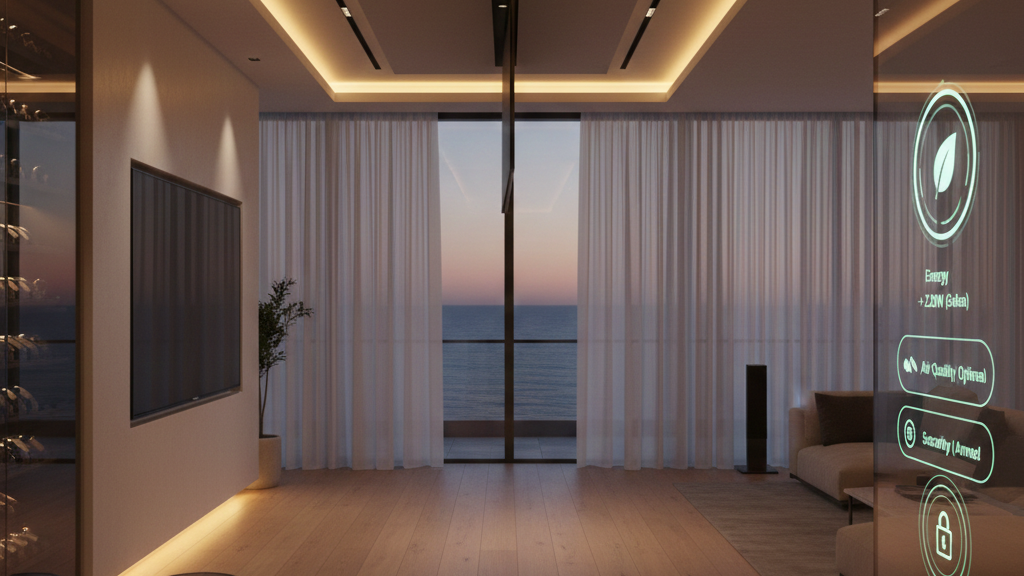
If you’re planning a high-end custom home right now, smart technology is no longer a “nice upgrade.” It’s part of the core design, just like the floor plan and the structural system. In my experience over the past 10 years working on luxury homes, the most satisfied clients are the ones who thought about smart systems early—before drywall, before finishes, and definitely before move-in day.
In this guide, we’ll walk through the key smart home technology trends luxury homes 2025 are being built around—from AI-driven automation to wellness systems, security, and energy management. By the end, you’ll understand how to approach 2025 smart home automation for luxury builds in a way that supports your lifestyle, protects your investment, and keeps your home ready for what’s coming next.
Why Smart Home Technology Is Essential in Today’s Luxury Market
The Shift Toward Fully Integrated Living
Luxury buyers expect seamless digital experiences across the entire home
Today’s luxury buyer is used to seamless tech everywhere else in life—phones, cars, offices, and hotels. They expect the same from their home. That means lighting, climate, shades, security, and audio working together behind one simple interface, not 12 different apps. This is where high-end smart home integration trends 2025 are heading: unified, intuitive control instead of a patchwork of gadgets.
Convenience, wellness, and efficiency drive adoption
Most owners don’t want “tech for tech’s sake.” They want homes that open the shades automatically in the morning, warm the pool before they get home, and lock up at night without a second thought. They also want better sleep, cleaner air, and smaller utility bills. Smart systems are simply the toolset to make that happen consistently.
Technology as a Value Multiplier
Smart systems increase resale appeal and home marketability
A properly designed smart home makes a property easier to sell and easier to live in. Buyers notice when a house is wired with a full automation backbone and when it’s not. For new builds, ignoring luxury home smart systems trends for new builds 2025 is like ignoring the kitchen—future buyers will see it as a major missing piece.
Enhanced energy savings and operational efficiency
Smart thermostats, lighting control, and energy monitoring don’t just add convenience; they help reduce waste. Over years of ownership, that efficiency can offset a meaningful portion of your ongoing operating costs, especially in larger estates.
Trend 1 — AI-Driven Home Automation
Predictive, Self-Learning Systems
AI that adapts lighting, climate, security, and user preferences
In 2025, “smart” no longer just means programmable. AI-powered systems learn your habits. They notice that you like the primary suite at a certain temperature, that you prefer warmer lighting in the evening, and that shades should drop when direct sun hits a certain window. Over time, the home feels like it’s anticipating you rather than waiting for commands.
Centralized Ecosystems Over Fragmented Devices
Whole-home platforms (Control4, Savant, Crestron) replacing single-device apps
One of the biggest cutting-edge smart tech for luxury homes 2025 shifts is away from “app clutter.” Whole-home platforms like Control4, Savant, and Crestron act as the operating system of the house. Individual devices still matter, but they report into a unified brain, so you control the home as a single system instead of a pile of parts.
Personalization & Voice Intelligence
Ultra-responsive AI assistants integrated into luxury environments
Voice control is maturing past the novelty stage. Instead of shouting commands at a cheap speaker, luxury builds are integrating discreet mics, high-quality audio, and AI assistants tuned to the household. You might say, “Goodnight,” and the system will lock doors, arm security, adjust climate, and set your bedroom lights to a soft preset—without fumbling with controls.
Trend 2 — Wellness-Focused Smart Technology
Air & Water Quality Automation
Real-time air purification, humidity balancing, CO₂ monitoring
Wellness is central to emerging smart home features luxury construction 2025. Smart air systems now track particulates, humidity, and CO₂ levels in real time, automatically boosting filtration or fresh air exchange when needed. Owners can see, on a dashboard, that the air quality in their home is actually as clean as it looks.
Whole-home water filtration and quality sensors
For high-end homes, a single fridge filter isn’t enough. Whole-home filtration with smart sensors gives you insight into water quality at the main, plus critical fixtures and appliances.
Smart Lighting for Circadian Health
Tunable spectrum LEDs that simulate natural light cycles
Luxe homes are increasingly using tunable LED systems that shift color temperature and intensity throughout the day. Morning light is brighter and cooler to help you feel alert, while evening scenes are warmer and dimmer to support winding down.
Tech-Integrated Wellness Rooms
Smart saunas, infrared therapy, cold plunges, and meditation environments
Wellness suites are becoming standard in luxury builds: rooms with smart saunas, infrared panels, cold plunges, and sound/lighting systems tailored to meditation or breathwork. Tech here is quiet and supportive—adjusting temperature, light, and audio so the space does what it’s meant to do with minimal fuss.
Trend 3 — Advanced Security & Privacy Systems
360° Exterior Surveillance & AI Detection
Smart cameras with facial recognition, object detection, floodlight automation
For clients with significant assets or frequent travel, security is non-negotiable. 2025 systems use AI to distinguish between a delivery driver, a neighbor walking a dog, and an unknown visitor at 2 a.m. The system can alert you differently for each, and coordinate lights, gates, and recordings accordingly.
Biometric Entry & Safe Rooms
Fingerprint, iris, and voice authentication for doors, garages, and vaults
High-end security is moving past codes and fobs. Biometric entry—fingerprint readers, palm scanners, even voice recognition—tightens access control for garages, mechanical rooms, wine rooms, and vaults.
Cybersecurity for Smart Homes
Encrypted networks, intrusion monitoring, secure smart hubs
As smart homes become more connected, cybersecurity becomes as important as physical locks. In new luxury builds, we’re designing dedicated network rooms with robust firewalls, segmented Wi-Fi, and professionally managed systems to protect the home from digital threats.
Trend 4 — Energy Efficiency & Sustainability Tech
Smart Energy Management Systems
Automated power optimization, peak-hour balancing
Energy dashboards that used to be “nice extras” are now central to smart home technology trends luxury homes 2025. Smart panels and monitoring systems can track consumption by circuit, automatically reduce non-essential loads during peak pricing, and provide detailed data to help you fine-tune usage.
Solar Integration & Battery Storage Systems
Tesla Powerwall, Enphase, and other high-end storage solutions
Solar isn’t new—but its integration with smart home platforms is. In 2025, solar arrays, batteries, generators, and smart panels work together. The home can prioritize critical loads during outages and give you clear visibility into how much energy you’re producing and storing.
Smart HVAC & Water Heating
Zoned systems with learning algorithms for efficiency and comfort
HVAC zoning has been around for a while, but what’s changing is how the system learns your patterns, responds to weather, and interacts with shades and windows. Smart water heating—recirculation on demand, smart tank management—adds another layer of savings and comfort.
Trend 5 — Immersive Entertainment & Lifestyle Automation
Next-Generation AV Integration
Hidden TVs, 8K projection, multi-room audio with spatial sound
Entertainment tech is increasingly invisible until you need it. TVs that disappear into walls or ceilings, projectors with near-daylight performance, and discreet multi-room audio mean your interior design doesn’t have to revolve around a black rectangle.
Smart Kitchens & Connected Appliances
AI cooking assistants, self-diagnosing appliances, integrated monitoring
Kitchen systems are getting smarter: ovens that automatically adjust based on internal food temperature, fridges that track inventory, and appliances that notify service providers before you even know there’s an issue. This kind of 2025 smart home automation for luxury builds is all about reducing friction in daily routines.
Outdoor Smart Living Spaces
Automated pergolas, climate-controlled patios, smart pools/spas
Outdoor zones now feature motorized louvers that adjust shade, overhead heating and cooling, integrated audio, and app/voice-controlled pool systems. Lighting scenes can shift from “family dinner” to “evening party” with one tap.
Trend 6 — Robotics in Luxury Homes
AI Robotics for Daily Assistance
Cleaning, organization, and companionship systems
Robotic vacuums have been around for a while, but 2025 brings more sophisticated mobile robots that can map the home, help with basic tasks, and interface with the rest of your smart systems. They’re not replacing staff; they’re handling repetitive chores quietly in the background.
Automated Maintenance Technology
Smart irrigation, robotic lawn care, pool-cleaning robots
Exterior robots and smart systems handle lawns, pools, and irrigation schedules based on real-time weather and soil data. This reduces both water use and manual oversight.
Robotic Kitchens & Storage Systems
Mechanical arms for cooking, automated pantry management
Still emerging, but rapidly improving: mechanical arms and automated storage systems that can retrieve, prep, and even cook simple meals. For serious foodies, these will likely complement, not replace, traditional cooking—but they show where emerging smart home features luxury construction 2025 are heading.
Trend 7 — Smart Materials & Architectural Integration
Dynamic Glass & Solar-Adaptive Windows
Tint-changing technology for heat and glare control
Electrochromic glass can change tint throughout the day, cutting glare and heat gain without blocking views. Integrated with your automation platform, windows can adjust based on sun position and interior temperature targets.
Integrated Smart Surfaces
Touch-enabled walls, built-in sensors, interactive floors
Walls that double as control panels, countertops with built-in charging and displays, and floors with occupancy sensing sound futuristic, but they’re moving into real-world luxury applications, especially in media, wellness, and kids’ spaces.
Structural Integration During Construction
Invisible wiring, recessed automation hubs, future-proof conduits
The most luxurious smart homes don’t look “techy.” Wiring, sensors, and hubs are hidden in walls, ceilings, and structured wiring closets. Conduit runs and spare fiber paths are laid in during construction so upgrades later don’t require tearing the house apart.
How Builders & Architects Are Preparing for 2025 Tech Demands
Designing With Technology Infrastructure in Mind
Wiring rooms, AV closets, fiber runs, cooling for tech equipment
One of the biggest luxury home smart systems trends for new builds 2025 is the early design of tech infrastructure. We’re planning dedicated AV racks, mini “server rooms,” cable pathways, and ventilation for equipment long before finishes are selected.
Collaboration With Smart Home Integrators Early in Design Phase
Ensures seamless aesthetic + functional integration
Bringing a smart home integrator in at schematic design prevents a lot of headaches later. They help coordinate device locations, wiring, Wi-Fi coverage, and control points so your lighting, trims, and built-ins are designed with tech in mind—not after the fact.
Future-Proofing Homes for Evolving Technology
Modular systems, upgradable hardware, open platforms
No one can predict every new product, but you can design around flexibility: modular racks, open standards where possible, and layouts that allow you to swap core components without opening walls.
Cost Considerations for Smart Home Systems in Luxury Builds
Budget ranges for whole-home automation in 2025
For a true, professionally integrated luxury system, it’s common for smart tech to represent a significant line item in the total build budget. The exact number depends on automation depth—basic lighting/audio/security versus fully integrated wellness, energy, and robotics.
Cost drivers (complexity, size, ecosystem choice)
Major drivers include home size, number of controlled zones, the ecosystem (Savant vs Crestron vs Control4), and finish expectations (e.g., invisible speakers vs visible grilles). Outdoor tech and specialty rooms (theaters, wellness suites) add additional layers.
Expected maintenance and software subscription costs
Plan for ongoing costs: software licensing, remote monitoring, cloud services, and periodic hardware refreshes. Think of your smart home like a luxury car—you’ll want periodic “services” to keep everything smooth and secure.
Homeowner Checklist: Planning Smart Tech for a Luxury Build
Define lifestyle priorities (security, wellness, automation levels)
Before you talk specific products, decide what matters most: ultra-secure perimeter, deep wellness integration, invisible entertainment, or all of the above. This clarity keeps the tech design focused.
Choose ecosystem early (Savant, Crestron, Control4)
Pick your primary automation platform early so wiring and device choices align with that ecosystem instead of fighting it.
Work with tech integrators during schematic design
Your integrator, architect, and builder should be in the same conversation before walls are drawn in stone. This is how you get truly smooth, high-end smart home integration trends 2025 style.
Ensure robust networking and cybersecurity infrastructure
Insist on enterprise-grade networking: solid Wi-Fi coverage, strong security, and proper segmentation between home control, personal devices, and guest access.
Plan for future add-ons (EV chargers, batteries, solar, robotics)
Even if you’re not installing everything on day one, rough-in for EV chargers, battery storage, additional roof solar, and new sensors or robots. That foresight will save time and money later.
FAQs About Smart Home Tech in 2025
Is smart home tech a good investment for resale value?
Yes—especially in luxury markets. Buyers expect a certain level of built-in tech. Homes that feel “analog” compared to their peers can sit longer and sell for less.
Can older homes be upgraded without major reconstruction?
Often yes. Wireless solutions and selective retrofits can add a surprising amount of capability, though new construction always offers the cleanest, most integrated results.
Which ecosystems are best for luxury homes?
Savant, Crestron, and Control4 are common choices in the high-end space. The “best” one depends on your preferences, the integrator’s expertise, and the complexity of your home.
How secure are AI and cloud-connected home systems?
With proper network design, strong passwords, updates, and professional management, smart homes can be very secure. Treat them seriously—like any high-value digital system.
Conclusion — Smart Technology as the New Standard for Luxury Living
Tech-driven convenience, wellness, and security define 2025 luxury
Smart Home Technology Trends for Luxury Builds in 2025 are ultimately about making high-end homes calmer to live in, easier to manage, and better for your health and safety. When tech is designed in from day one, it feels natural—not overwhelming.
Smart ecosystems enhance lifestyle and protect property value
A thoughtfully integrated system becomes part of the architecture. It supports daily routines, backs up your security, trims your energy use, and helps your property stand out in a crowded luxury market.
The most successful luxury builds integrate technology from day one
If you’re ready to plan a smart, tech-forward custom home, start by confirming that your project is within Our Service Area. For design and lifestyle inspiration in nearby communities, explore Custom Home Building in Lantana, FL and review builder insights in Custom Home Builders in Wellington, FL.
Then, when you’re ready to map out your own smart home wish list—based on the best Smart Home Technology Trends for Luxury Builds in 2025—call 561-962-4567. The Luxure Group team can help you integrate architecture, construction, and technology into one clear, future-ready plan.